Skin Quality vs. Skin Tightening: Why They’re Not the Same Thing
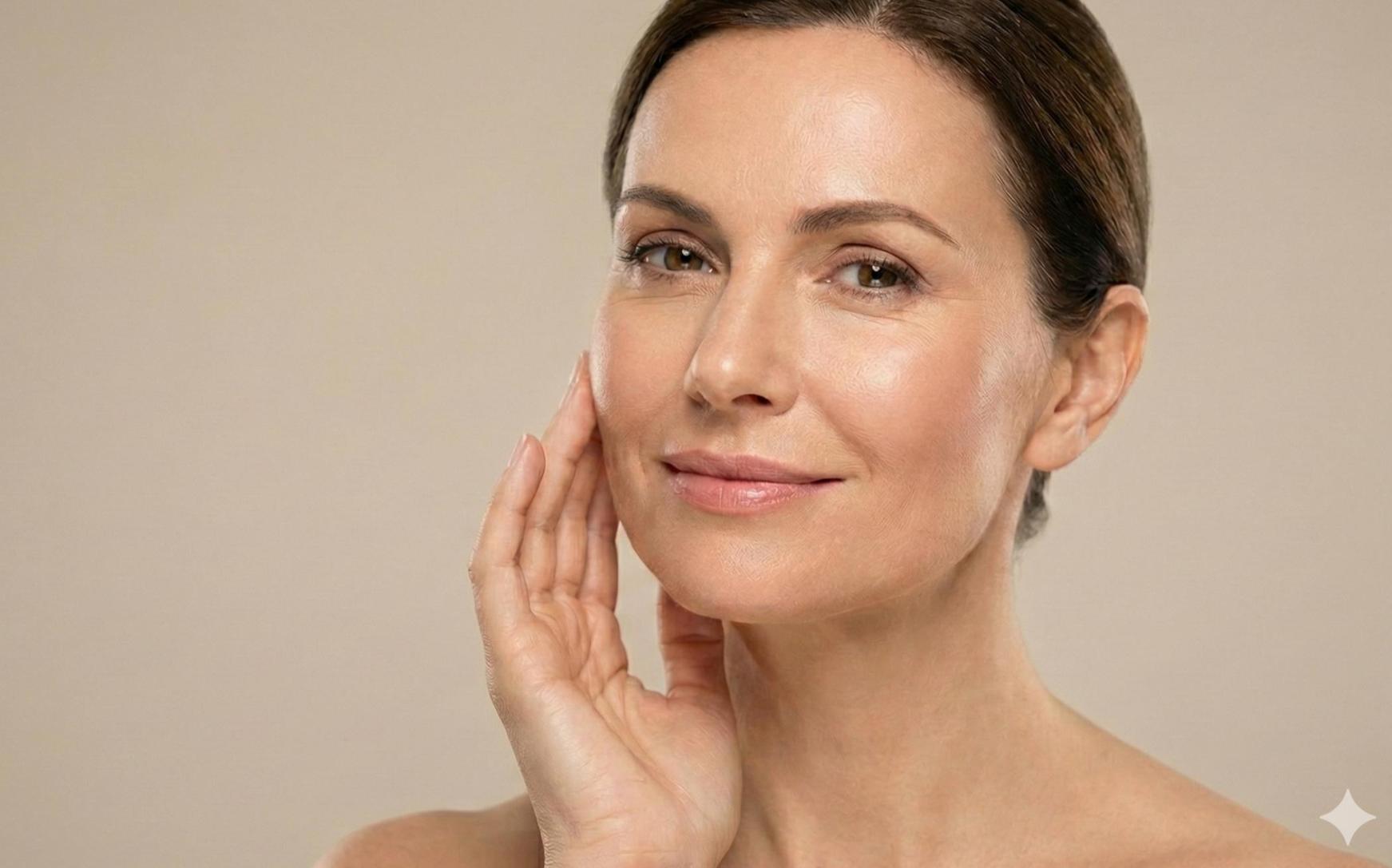
Beautiful skin is about more than a youthful glow. Understanding the difference between skin quality, firmness, and facial volume loss is the foundation of thoughtful, natural-looking rejuvenation. Discover why treating the right concern matters more than simply choosing a treatment.
Understanding collagen, skin laxity, facial volume loss and the treatments that address each concern.
Have you ever looked in the mirror and thought, “My skin just doesn't look as firm as it used to”?
Perhaps you've noticed changes in your jawline, fine lines that seem more noticeable, a loss of facial fullness, or skin that simply doesn't have the same healthy glow it once did.
It's common to describe all these changes as aging or sagging skin. But from an aesthetic perspective, they aren't necessarily the same thing.
Skin quality, skin laxity, and facial volume loss are three distinct concerns. Understanding the difference is one of the most important steps toward choosing an appropriate aesthetic treatment.
At R+ Aesthetics, I believe beautiful results begin with understanding why your skin is changing—not simply choosing a treatment because it's popular.
What Is Skin Quality?
Skin quality refers to the overall health, appearance and characteristics of your skin.
It encompasses several important factors:
Texture: How smooth or uneven the skin feels and appears.
Hydration: The skin's ability to maintain moisture and a healthy barrier.
Tone: The appearance of discoloration, redness, and uneven pigmentation.
Elasticity: The skin's ability to stretch and return toward its original shape.
Fine lines: Superficial changes associated with aging, environmental exposure, and repetitive movement.
Radiance: The overall appearance of healthy, well-maintained skin.
You can have relatively firm skin but still struggle with pigmentation, enlarged pores, rough texture, or dehydration.
Likewise, someone can have beautifully maintained, radiant skin while experiencing noticeable facial laxity.
This is why improving skin quality and tightening skin require different approaches.
What Causes Skin Quality to Change?
Our skin is constantly responding to both internal and external influences.
As we age, collagen production and remodeling change, elastin fibers undergo damage and the skin's natural renewal processes become less efficient.
Other contributing factors include:
Chronic sun exposure
Hormonal changes, including menopause
Genetics
Smoking and environmental stressors
Changes in skin hydration and barrier function
Inflammation and certain skin conditions
Lifestyle and nutritional factors
These changes can lead to uneven texture, pigmentation, fine lines and a gradual reduction in skin resilience.
The encouraging news is that many aspects of skin quality can be improved with consistent skincare and appropriately selected professional treatments.
What Is Skin Laxity?
Skin laxity refers to a loss of firmness and elasticity that allows the skin to become looser or less supported.
While collagen and elastin changes contribute to laxity, facial aging involves more than the skin alone.
Over time, changes also occur in facial fat compartments, connective tissues, muscles, and bone.
These structural changes may contribute to:
Less definition along the jawline
Increased prominence of jowls
Loose skin around the lower face
Changes in the neck and décolleté
A less supported or less defined facial appearance
Unlike superficial skin texture concerns, meaningful skin laxity may not respond substantially to treatments designed primarily to improve the skin's surface.
Healthy, glowing skin is not necessarily tight skin—and tight skin is not necessarily healthy skin.
Understanding this distinction helps establish realistic expectations.
Facial Volume Loss: The Often-Overlooked Piece
One of the most misunderstood aspects of facial aging is volume loss.
As we age, facial fat distribution changes, and the underlying bone and soft-tissue structures gradually remodel.
This may create:
Hollowing in the temples
Flattening of the cheeks
Changes beneath the eyes
More noticeable facial folds
Reduced definition in certain facial contours
Sometimes what appears to be sagging is partly related to the loss or redistribution of underlying support.
This is why a treatment that improves the skin's surface may not correct a hollow cheek—and why a treatment that restores volume may not meaningfully improve rough texture or pigmentation.
Each concern requires its own assessment.
Treatments That Focus on Skin Quality
Several aesthetic treatments are primarily designed to improve the appearance and condition of the skin.
Microneedling: Supporting Skin Remodeling
Microneedling creates controlled micro-injuries in the skin to stimulate a natural wound-healing response.
Over time, this process can encourage collagen remodeling and improve certain concerns involving:
Uneven texture
Fine lines
Enlarged-looking pores
Certain types of acne scarring
Overall skin appearance
Microneedling may also produce modest improvements in firmness in selected patients, but it should not be confused with a surgical lifting procedure.
Results develop gradually, and a series of treatments may be recommended depending on the concern.
Microneedling With PRP
Platelet-rich plasma, or PRP, is prepared from a patient's own blood and contains concentrated platelets.
PRP may be used alongside microneedling as an adjunctive treatment.
Some studies suggest potential benefits for skin rejuvenation and certain acne scars, although research quality varies and the additional benefit over microneedling alone is not firmly established for every indication.
PRP is not a substitute for correcting significant skin laxity or facial volume loss.
Chemical Peels: Refining the Skin's Surface
Chemical peels use carefully selected exfoliating agents to promote controlled skin renewal.
Depending on the formulation and depth, they may help improve:
Uneven pigmentation
Sun-related discoloration
Rough skin texture
Certain acne concerns
Superficial fine lines
Different peels have different indications, recovery requirements, and risks.
While some deeper resurfacing treatments may improve aspects of skin firmness, most superficial peels are not designed to lift sagging facial tissue.
Professional Skincare: The Foundation
A thoughtful skincare routine remains one of the most important investments in long-term skin quality.
Daily broad-spectrum sunscreen, appropriate moisturization, and evidence-based ingredients such as retinoids can support healthier-looking skin.
Professional treatments may complement skincare, but they do not replace consistent daily care.
Treatments That Address Structural Aging
When the primary concern involves volume loss, facial contours, or changes in support, a different treatment approach may be appropriate.
Sculptra: Gradual Collagen Stimulation
Sculptra is a poly-L-lactic acid injectable that stimulates collagen production over time.
It is used for specific facial contour and wrinkle-related indications, with results developing gradually.
Rather than providing an immediate lifting effect, Sculptra is often considered when gradual improvement in facial volume and contour is desired.
It is not a direct replacement for treatments that address significant excess or sagging skin.
Radiesse: Structural Support and Collagen Stimulation
Radiesse is a calcium hydroxylapatite-based injectable filler.
Depending on the treatment area and technique, it can provide immediate contour correction and stimulate collagen-related tissue changes over time.
Its use must be tailored to the patient's anatomy and the product's approved indications.
Although biostimulatory fillers may improve the appearance of certain age-related changes, they do not produce the same degree of lifting as surgery.
Hyaluronic Acid Dermal Fillers: Restoring Volume
Hyaluronic acid fillers can restore volume, enhance contours, and soften certain facial folds.
When carefully selected and placed, they may help restore balance to areas affected by age-related volume changes.
However, adding volume does not necessarily tighten loose skin.
That distinction is particularly important when evaluating the lower face.
Why More Filler Isn't Always the Answer
This is one of the most important conversations in modern aesthetic medicine.
When patients notice heaviness around the lower face or changes in their jawline, they may assume that additional filler will create a lifted appearance.
But facial laxity and facial volume loss are not interchangeable.
In some individuals, carefully placed filler may improve contour or restore missing support.
In others, additional filler may increase fullness without meaningfully correcting loose tissue.
Too much volume can also alter facial proportions and create an appearance that feels heavier rather than more refreshed.
The goal should never be to add more product simply because aging changes are present.
Instead, the priority should be identifying which tissues and structures are contributing to the concern.
Sometimes the most appropriate recommendation is a different treatment altogether—or recognizing when nonsurgical options are unlikely to achieve the desired result.
Can PDO Threads Tighten the Skin?
PDO threads are absorbable sutures that may be used in selected aesthetic procedures.
Different thread designs serve different purposes. Some are intended to provide temporary mechanical tissue repositioning, while others are used with the aim of stimulating localized tissue responses.
However, the evidence supporting long-term lifting and tightening outcomes remains limited, and results can vary considerably.
Thread procedures also carry risks, including asymmetry, visible or palpable threads, infection, dimpling, and other complications.
They should not be viewed as equivalent to surgical lifting.
Patients with significant skin laxity may benefit more from evaluation by a qualified surgical specialist.
Why Combination Treatments May Make Sense
Facial aging rarely involves just one concern.
A patient may simultaneously experience:
Uneven pigmentation
Reduced collagen-related skin resilience
Fine lines
Changes in facial volume
Mild or moderate skin laxity
Because these concerns arise through different mechanisms, a single treatment may not address all of them.
For example, someone might benefit from improving skin texture through microneedling while separately evaluating volume loss or facial contour changes.
Another person may need only consistent skincare and a targeted resurfacing treatment.
A personalized plan does not necessarily mean more treatments. It means selecting interventions that are appropriate for the actual concern.
What About Changes in Your 40s and 50s?
For many women, the 40s and 50s bring noticeable changes in skin appearance.
Hormonal transitions, including perimenopause and menopause, can influence skin hydration, collagen content, and elasticity.
At the same time, cumulative sun exposure and natural changes in facial structure become increasingly visible.
This combination may create the impression that skin has suddenly aged.
However, not every change requires an injectable or aggressive treatment.
Understanding whether the primary issue involves surface quality, volume, laxity, or a combination of factors can help guide a more thoughtful approach.
How Do You Know What Your Skin Actually Needs?
The answer begins with a comprehensive aesthetic assessment.
Rather than focusing exclusively on a wrinkle or area of concern, a qualified provider should consider the broader picture:
Skin condition: Is the concern primarily texture, pigmentation, dehydration, or superficial lines?
Facial structure: Is volume loss contributing to the appearance of aging?
Tissue laxity: Is there meaningful looseness that may require a different treatment strategy?
Medical history: Are there underlying conditions, medications, or other factors affecting treatment suitability?
Personal goals: Does the patient want subtle refinement, improved skin quality, facial balancing, or a more substantial change?
These questions help distinguish what can realistically be improved with nonsurgical aesthetic treatments and what may require another approach.
The R+ Aesthetics Philosophy:
Treat the Concern, Not Just the Wrinkle
At R+ Aesthetics in Ahwatukee, Phoenix, my approach to aesthetic medicine centers on education, individualized assessment, and natural-looking results.
With 19 years of registered nursing experience and specialized aesthetic training, I believe that understanding the underlying cause of a concern is just as important as understanding the treatment itself.
Beautiful skin isn't defined by the absence of every line, and facial rejuvenation isn't about changing the features that make you recognizable.
It's about making informed choices that support your individual goals.
Because beautiful results begin with understanding what your skin actually needs.
Beauty • Wellness • Longevity
R+ Aesthetics | Ahwatukee, Phoenix, Arizona
Begin With a Personalized Consultation
Whether you're concerned about skin texture, collagen changes, facial volume, or loss of firmness, a personalized consultation can help clarify which treatments may be appropriate for you.
Explore Treatments & Book a Consultation
Medical disclaimer: This article is intended for general education and does not constitute individualized medical advice. Results, treatment indications, risks, and recovery vary. Not every treatment discussed is necessarily available or appropriate for every patient. A qualified clinical assessment is required before treatment.